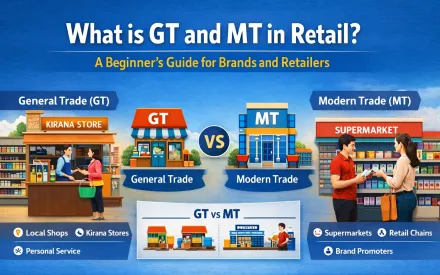
The retail industry operates through different distribution channels that help brands reach their customers effectively. Two of the most important retail channels are General Trade (GT) and Modern Trade (MT). Understanding these channels is essential for brands, retailers, and marketers who want to build strong retail marketing strategies.
In this guide, we will explain what GT and MT mean in retail, how GT vs MT retail marketing works, and the role of brand promoters in retail.
What is GT (General Trade) in Retail?
General Trade (GT) refers to the traditional retail format that includes small independent stores and local shops. These stores are typically owned and operated by individuals or families and are commonly found in neighborhoods and local markets.
Examples of General Trade Stores
-
Kirana stores
-
Small grocery shops
-
Local pharmacies
-
Independent retail outlets
General Trade stores have strong relationships with local customers and often provide personalized service. In countries like India, General Trade still dominates the retail market due to its wide reach in urban, semi-urban, and rural areas.
Key Features of General Trade
-
Small independent retailers
-
Strong customer relationships
-
Flexible pricing
-
High reach in rural and local markets
-
Quick distribution for FMCG products
Because of these factors, General Trade plays a major role in product distribution for many brands.
What is MT (Modern Trade) in Retail?
Modern Trade (MT) refers to organized retail formats such as supermarkets, hypermarkets, and retail chains. These stores operate in a structured environment with standardized systems, technology, and large product assortments.
Examples of Modern Trade
-
Supermarkets
-
Hypermarkets
-
Retail chain stores
-
Shopping mall grocery outlets
Modern Trade stores focus on providing a convenient shopping experience with organized shelves, digital billing systems, and large product selections.
Key Features of Modern Trade
-
Organized retail structure
-
Digital billing and POS systems
-
Fixed pricing
-
Attractive product displays
-
Self-service shopping experience
Modern Trade is especially popular in metropolitan cities where consumers prefer convenience and variety in one place.
GT vs MT Retail Marketing
When it comes to GT vs MT retail marketing, brands need different strategies for each channel because the retail environment and consumer behavior vary significantly.
| Factor | General Trade (GT) | Modern Trade (MT) |
|---|---|---|
| Store Type | Local stores and kirana shops | Supermarkets and chain stores |
| Customer Experience | Personal interaction | Self-service |
| Marketing Strategy | Distributor and retailer driven | In-store promotions and branding |
| Product Visibility | Limited shelf space | Organized shelves and displays |
| Technology | Minimal use of technology | Advanced POS and retail systems |
Brands often use a combination of both channels to achieve maximum market reach and sales growth.
Role of Brand Promoters in Retail
The role of brand promoters in retail is extremely important, especially in Modern Trade stores where many brands compete for customer attention.
Brand promoters are trained representatives who help customers understand products and encourage them to make purchasing decisions.
Key Responsibilities of Brand Promoters
1. Product Demonstration
Brand promoters explain product features and benefits to customers.
2. Customer Engagement
They interact with shoppers to build interest and awareness about the brand.
3. Increasing Sales Conversion
Promoters help convert potential customers into buyers through product knowledge and recommendations.
4. Maintaining Product Visibility
They ensure that products are properly displayed on shelves and promotional stands.
5. Market Feedback
Brand promoters collect valuable feedback from customers and share insights with the brand.
By performing these tasks, brand promoters help companies strengthen their retail presence and improve sales performance.
Why Brands Use Both GT and MT Channels
Successful brands rarely depend on just one retail channel. Instead, they use both General Trade and Modern Trade to expand their market reach.
Advantages of General Trade
-
Wide distribution network
-
Strong presence in local markets
-
Better penetration in rural areas
Advantages of Modern Trade
-
Better brand visibility
-
Organized product display
-
Higher customer footfall in urban areas
Using both channels allows brands to build strong distribution while maintaining brand visibility.
Conclusion
Understanding GT and MT in retail is essential for brands and retailers who want to build an effective retail strategy.
-
General Trade (GT) represents traditional local retail stores with strong customer relationships and widespread market reach.
-
Modern Trade (MT) represents organized retail formats that provide structured shopping experiences and better product visibility.
By combining both channels and implementing the right GT vs MT retail marketing strategies, brands can expand their reach and improve sales performance. Additionally, the role of brand promoters in retail remains crucial for influencing customer decisions and increasing product awareness.
For more retail insights and industry knowledge, visit Insightful Stores, where businesses can learn strategies to grow in today’s competitive retail market.